
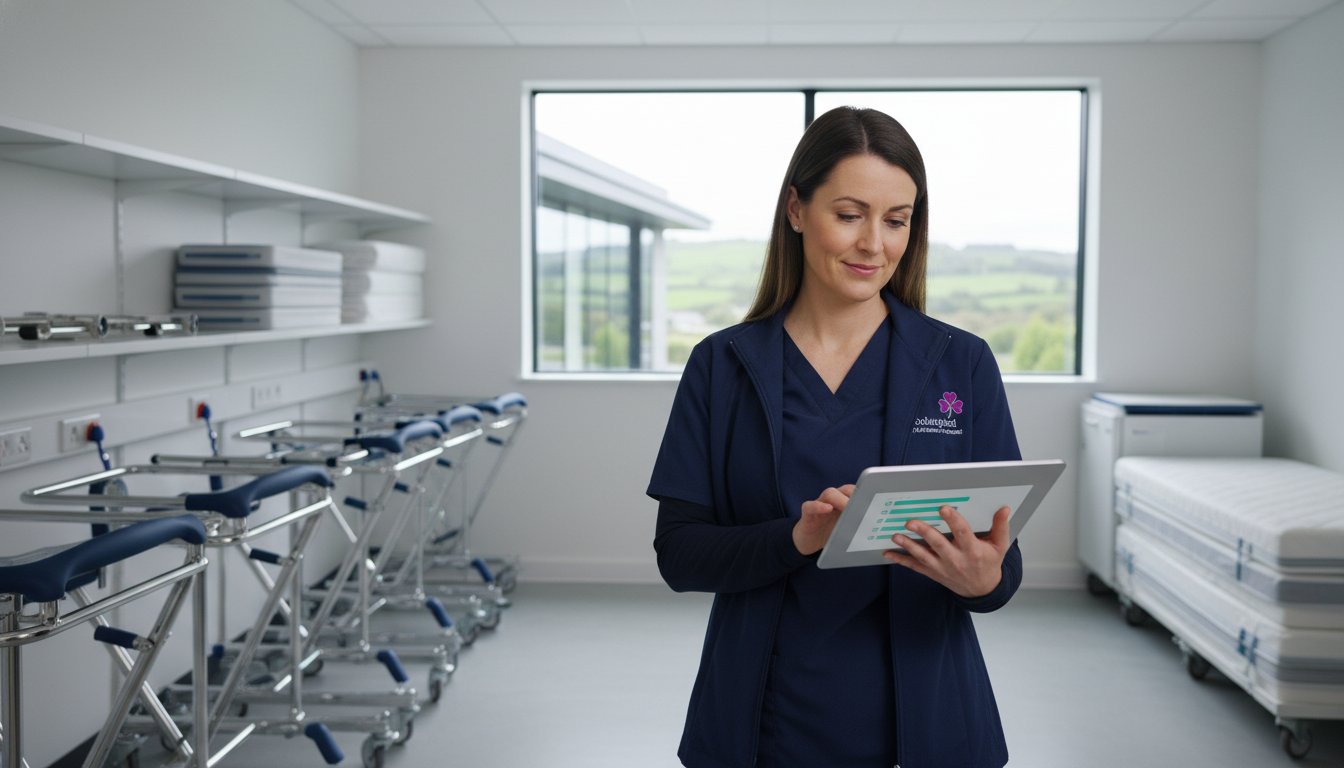
Medical Equipment Compliance in Irish Healthcare Settings
Healthcare environments across Ireland continue to place increasing focus on equipment maintenance, servicing, and operational compliance standards. From hospitals and nursing homes to community care settings, maintaining medical equipment properly helps support safer day-to-day operations and improves long-term equipment reliability.
Keeping accurate service records, organising scheduled inspections, and working with trusted suppliers can also help facilities stay prepared for audits and ongoing operational requirements.
Why Equipment Maintenance Matters
Medical equipment is used daily in demanding healthcare environments, making regular servicing and maintenance an important part of facility operations. Equipment such as mobile hoists, hospital beds, pressure care mattresses, and patient handling solutions should be checked and maintained according to manufacturer recommendations.
Having a structured maintenance process can help:
- support equipment longevity,
- reduce unexpected downtime,
- improve operational efficiency,
- and assist with record keeping and inspection preparation.
Simple processes such as scheduled servicing, cleaning routines, and equipment tracking can make a significant difference over time.
Creating a More Organised Equipment Process
Many healthcare providers are now moving toward more structured equipment management systems. Maintaining an updated asset register, tracking service dates, and documenting maintenance history can help simplify day-to-day management.
Working with experienced healthcare equipment suppliers can also help facilities coordinate servicing schedules, replacement planning, and ongoing equipment support more effectively.
Supporting Healthcare Providers Across Ireland
At Meditec Medical, we work with healthcare facilities across Ireland by supplying a wide range of healthcare equipment including hospital beds, pressure care solutions, patient handling equipment, seating, and mobility products.
Our team understands the importance of reliable equipment, responsive support, and practical healthcare solutions tailored to the needs of modern care environments.
As healthcare requirements continue to evolve, maintaining organised equipment processes and reliable supplier partnerships remains an important part of supporting efficient care delivery.
Medical Equipment FAQs
What is the difference between a medical device and general hospital furniture?
A medical device is defined by its intended clinical purpose, such as the diagnosis, prevention, or treatment of a disease or injury. Whilst a standard visitor chair is considered general furniture, a Meditec Hospital Bed is a medical device because it includes specific features for patient pressure relief and safety. Manufacturers must prove these clinical benefits to achieve CE marking under EU regulations, whereas general furniture does not require the same level of rigorous clinical evidence.
Are Irish nursing homes required to follow EU MDR 2017/745?
Yes, all healthcare providers in Ireland, including private and public nursing homes, must adhere to the standards set by the EU Medical Device Regulation (MDR). Whilst the manufacturer is responsible for the device’s initial certification, the nursing home is responsible for ensuring that medical equipment compliance is maintained once the device is in use. This involves ensuring all equipment is CE marked, correctly classified, and serviced according to the manufacturer’s statutory instructions.
What documentation do I need for a HIQA equipment audit?
HIQA inspectors will typically request a comprehensive audit trail that includes your centralised Asset Register and up-to-date service certificates. You must provide evidence of Planned Preventative Maintenance (PPM), professional decontamination records for items like mattresses, and staff training logs. It is also essential to have a clear record of any reported incidents or near-misses. Having these documents organised and accessible demonstrates a proactive approach to safety and clinical excellence.
Can we perform our own medical equipment maintenance in-house?
In-house maintenance is only advisable if your technical team is fully qualified and has received specific training from the original manufacturer. They must also have access to genuine spare parts and calibrated diagnostic tools to ensure the device’s warranty and safety certifications remain valid. This ensures that every Meditec Community Bed or hoist is serviced by engineers who possess the most current technical knowledge.
What happens if a facility is found to be using non-compliant medical equipment?
If HIQA identifies the use of non-compliant or poorly maintained equipment, they can issue a formal non-compliance notice. The facility will be required to create a time-bound corrective action plan to address the safety risks. In severe cases, this can lead to restricted admissions or a downgrade in the facility’s public safety rating. Beyond regulatory sanctions, using non-compliant hardware significantly increases the provider’s legal liability should a patient injury occur during care.
How does equipment decontamination impact the overall compliance score?
Decontamination is a vital component of the infection control standards monitored by HIQA and the HPRA. A failure to provide evidence of deep-level cleaning for support surfaces, such as a Mediflex Duo Mattress, can negatively impact your medical equipment compliance rating. Professional decontamination proves that you are actively preventing Healthcare-Associated Infections (HCAIs). It demonstrates that your facility prioritises a clean-to-dirty workflow and maintains the highest levels of clinical hygiene for every new patient admission.
Recent Comments